Leica’s Identity Crisis: Notes on the M EV1
© Leica Camera AG
Leica’s Identity Crisis: Notes on the M EV1
Leica Wetzlar seems to be losing its sense of direction. The lineup is starting to blur, and I can’t help thinking of Apple’s own recent confusion. Last year they released the iPad Pro (M4, I think) — thinner and lighter than the iPad Air. It completely broke the logic of the name; “Air” was supposed to stand for lightness and thinness. If Steve Jobs could see it, he’d be turning in his grave, furious at the erosion of that once ruthless clarity.
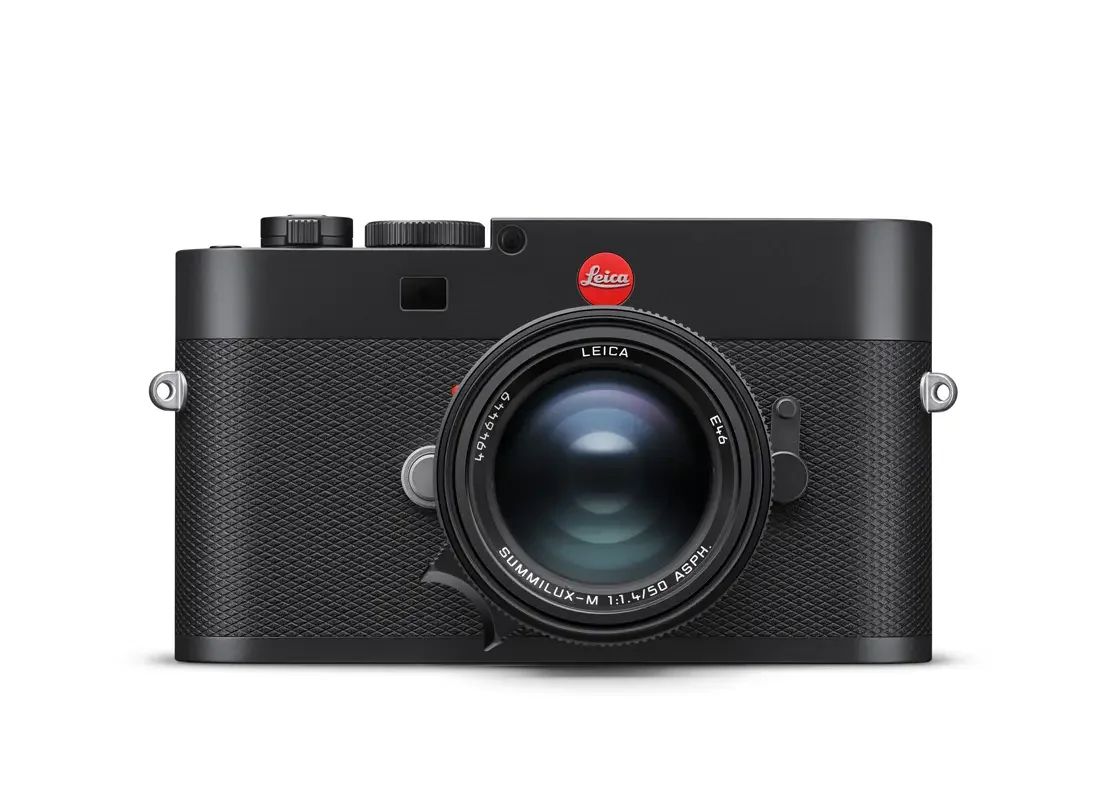
Yesterday I tried the new M EV1. It’s a pleasant camera — cheaper than the M11, feels similar in the hand, perhaps a touch lighter. Yet it’s also something of a Frankenstein. The moment you bring your eye to the EVF, the view turns feverish: everything reddens, the scene half-veiled by digital blood. Focus peaking, they call it. I’ve never liked it. Well, perhaps I’m exaggerating a bit — yet the moment you switch to magnification, you get disoriented; the world collapses into pixels, and you lose the scene again. I can’t imagine Cartier-Bresson tolerating that delay; the decisive moment doesn’t wait for software to catch up.
The Leica representative pointed out another option: you can focus “naked” — his word — without peaking or magnification. Naked, like looking at a 4×5 Fresnel glass. I tried it with a 50 mm Summicron and, surprisingly, it became my favourite method. It felt direct, elemental, even liberating — far better than the peaking/mag combination. But with the 28 mm Elmarit it was another story. Trying to focus on a line of text stamped on a bag about a metre and a half away, I found that when I checked with magnification, I was completely out of focus — even though the surroundings were glowing red, pretending everything was fine.
So I’m left wondering what Leica is really doing. The M EV1 feels like a kind of Q stripped of its autofocus — a camera designed for purity that ends up complicating it. Paradoxically, it’s more difficult and slower to focus than the mechanical rangefinder it’s meant to complement. The only clear advantage is that you see exactly what you’ll get — exposure, framing, focal length — and yes, the information display is superb. But that refinement belongs in a future M, not in a half-breed experiment.
Leica once stood for restraint — the distilled essence of seeing. The M EV1, for all its charm, feels like the moment that philosophy begins to flicker.