Darajani Market
Darajani Market
As you approach the market, the odours grow intense — very intense. The light is intense too, the humidity high, the heat heavy, and all of this early in the morning.
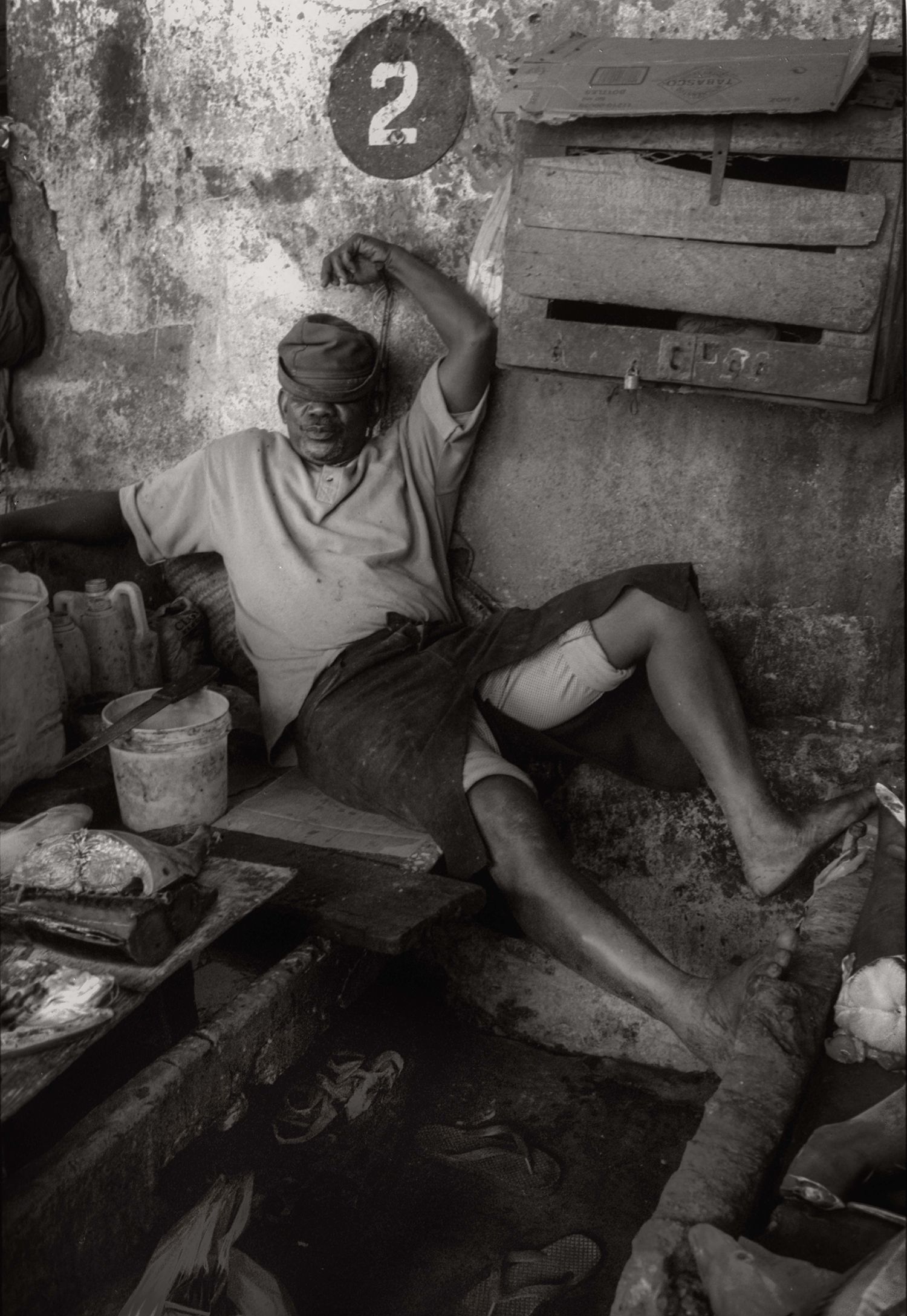
I don't really know what I was expecting as I crossed beneath the capital of the market door. Suddenly it was not so hot — but the smell made an extraordinary shift. The fermented-mango stench of the outside gave way to the morbid smell of dead meat. I was in the butcher section.
There wasn't much activity, not much meat. Passing through quickly, for a moment I thought of the Greenaway film. Then, unexpectedly, the smell shifted again: a strong, distinct tang of saltpetre took over everything. I was in the fish market.
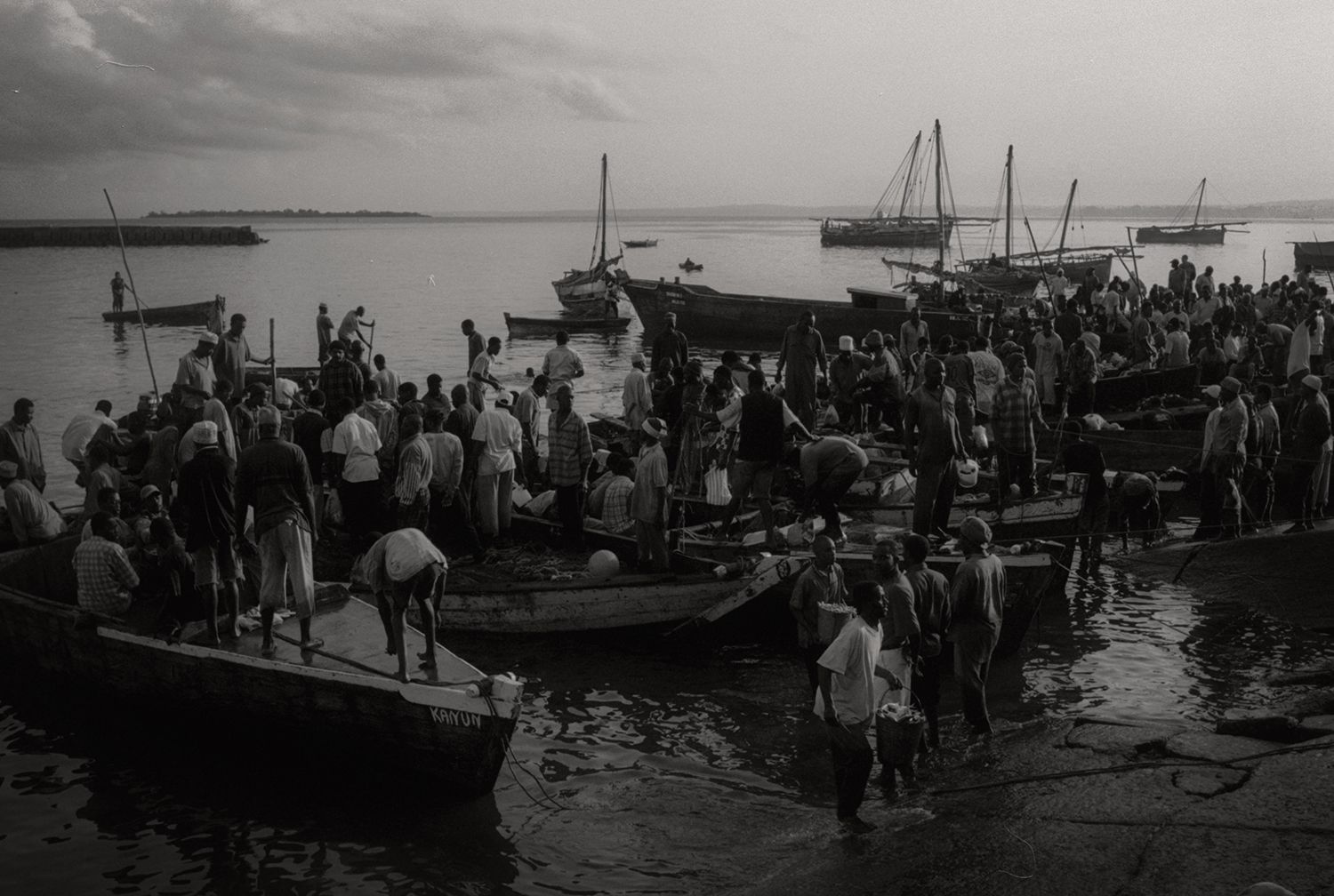
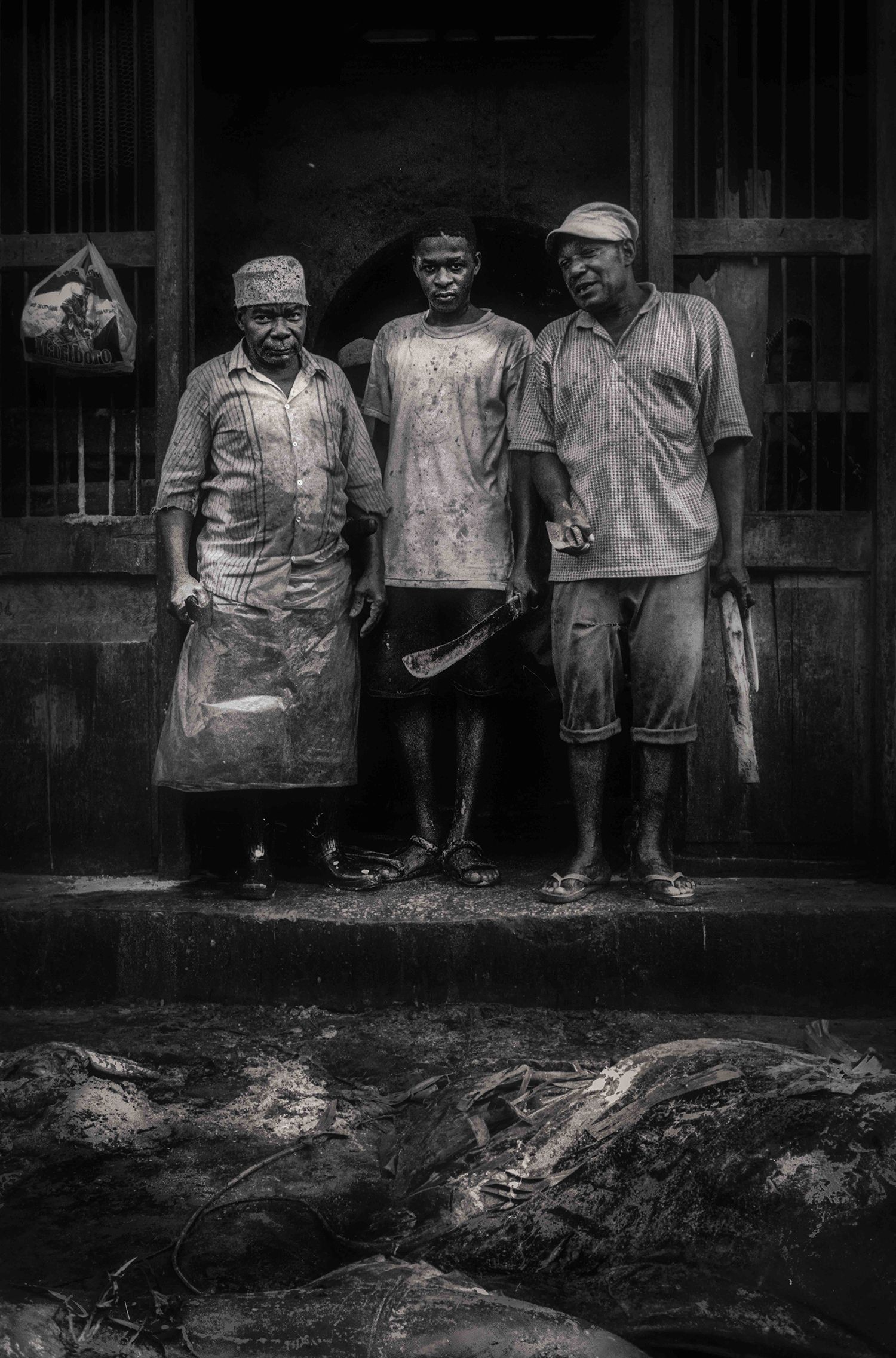
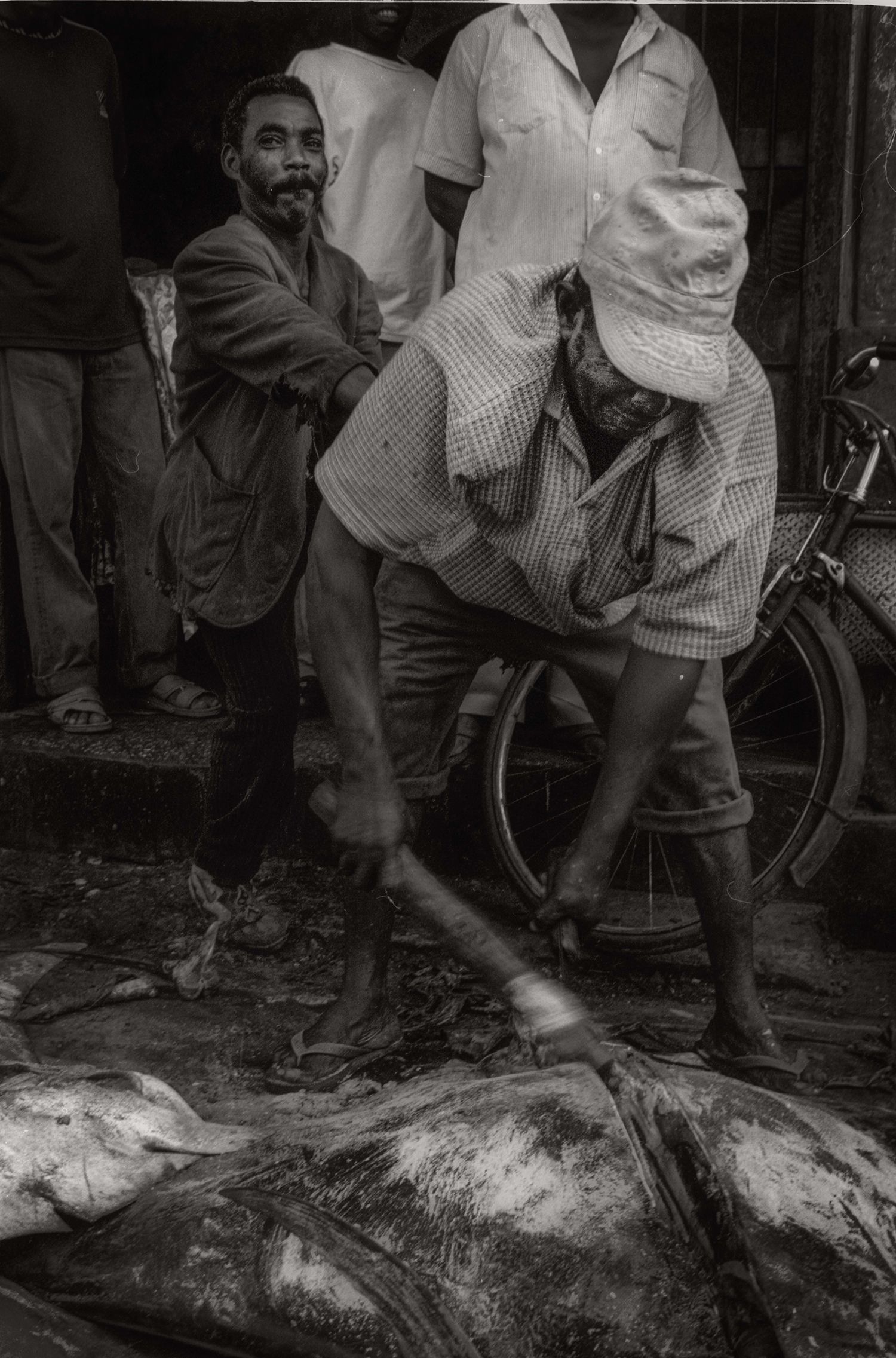
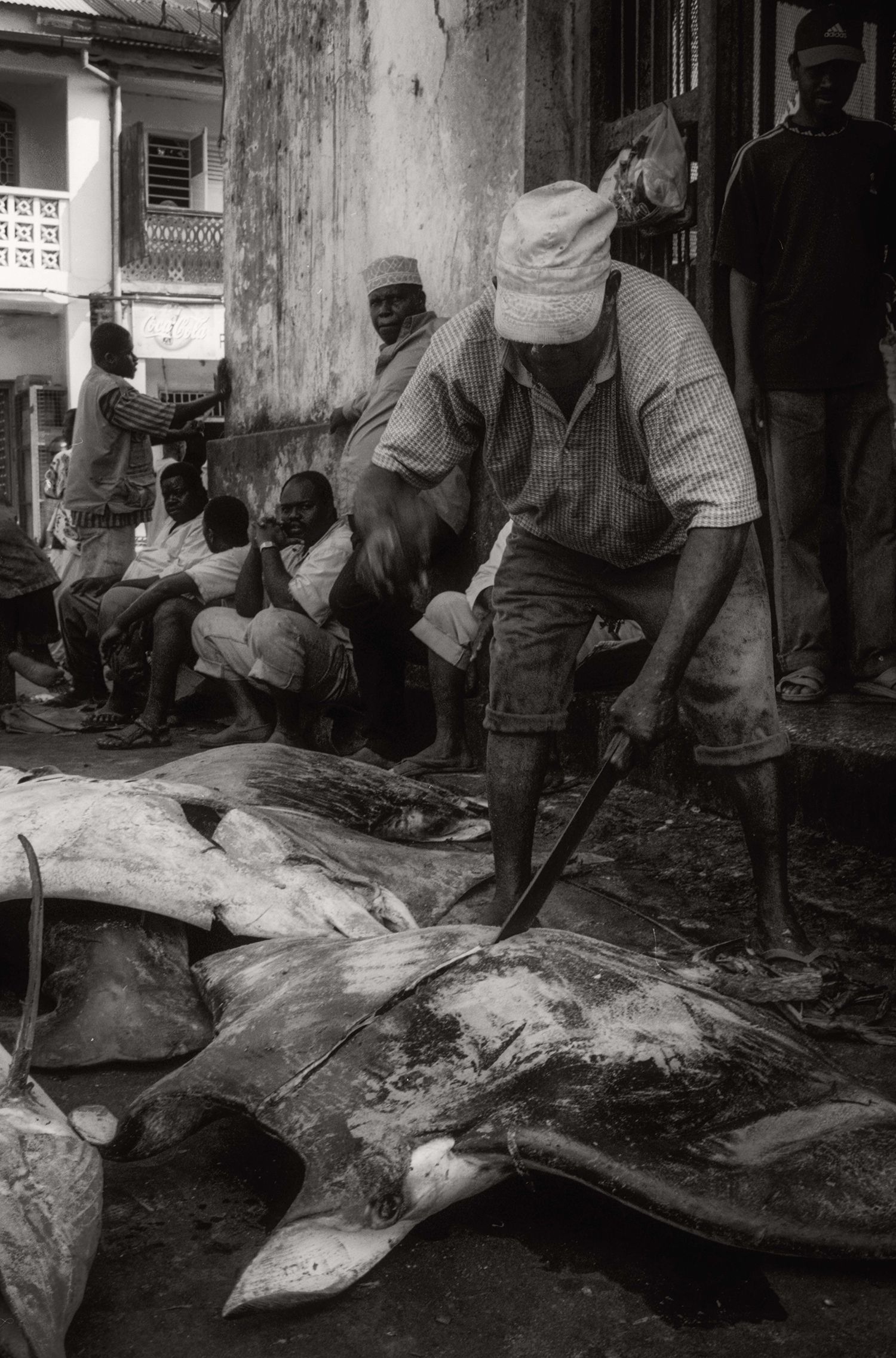
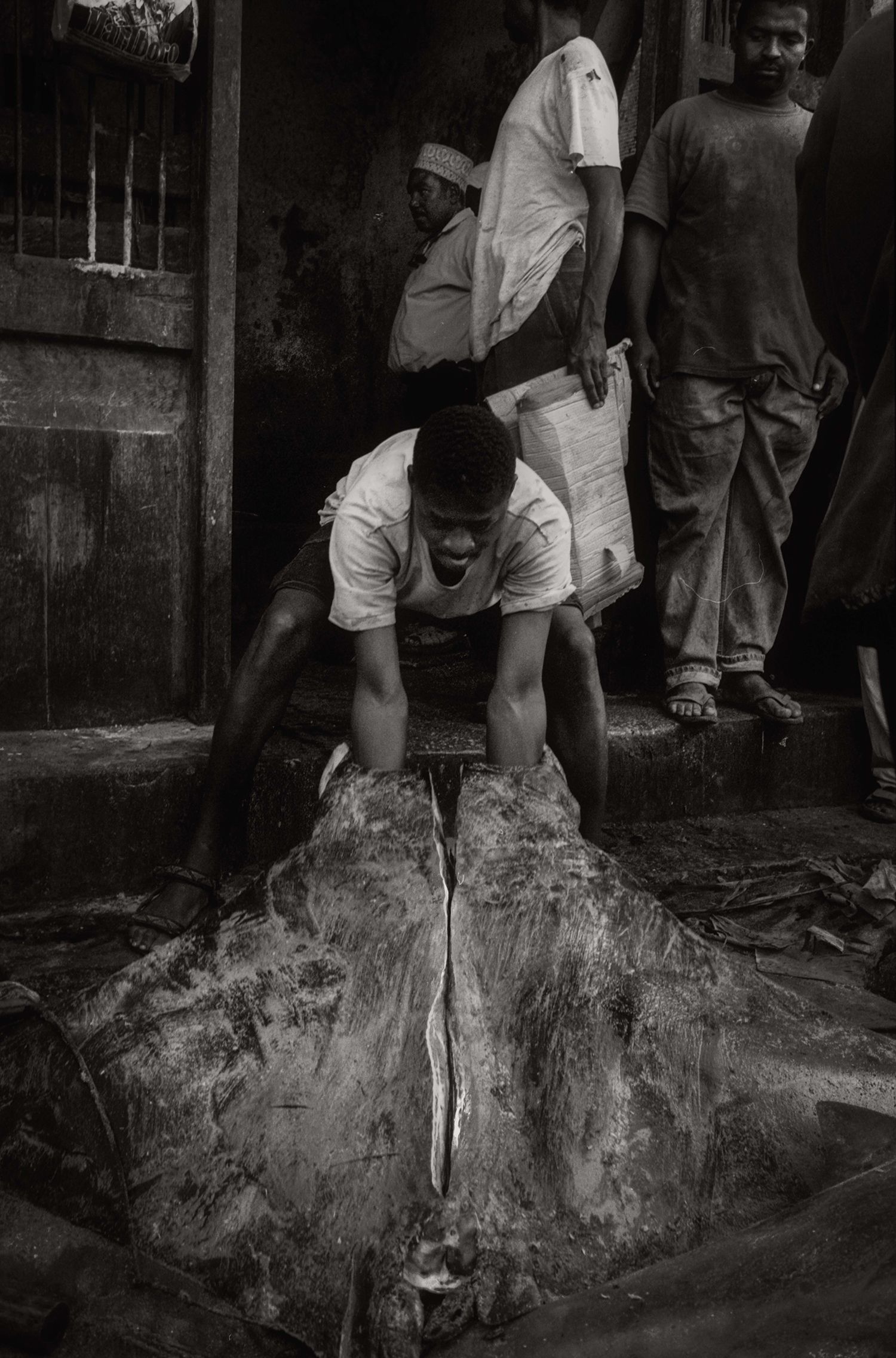
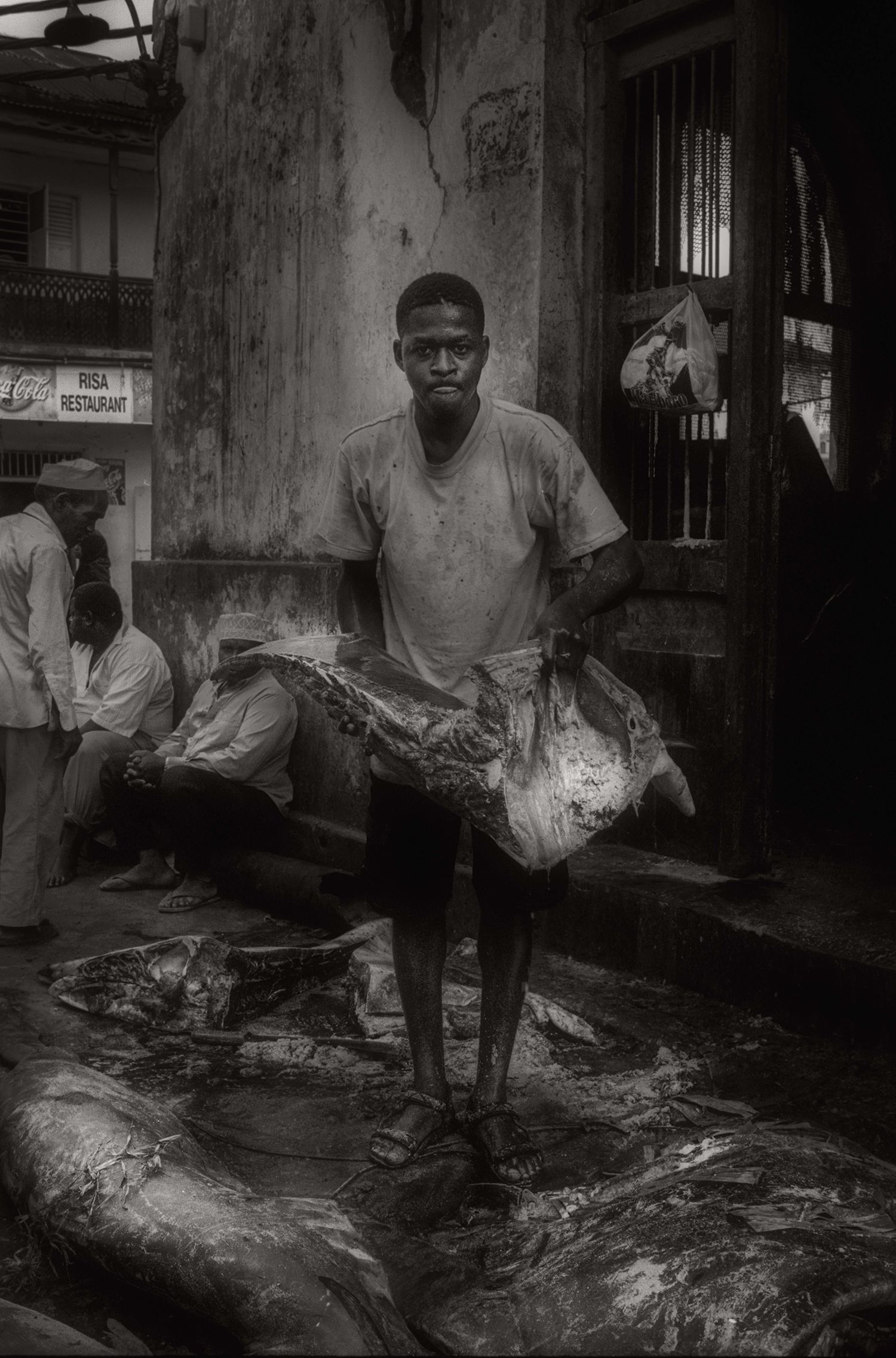
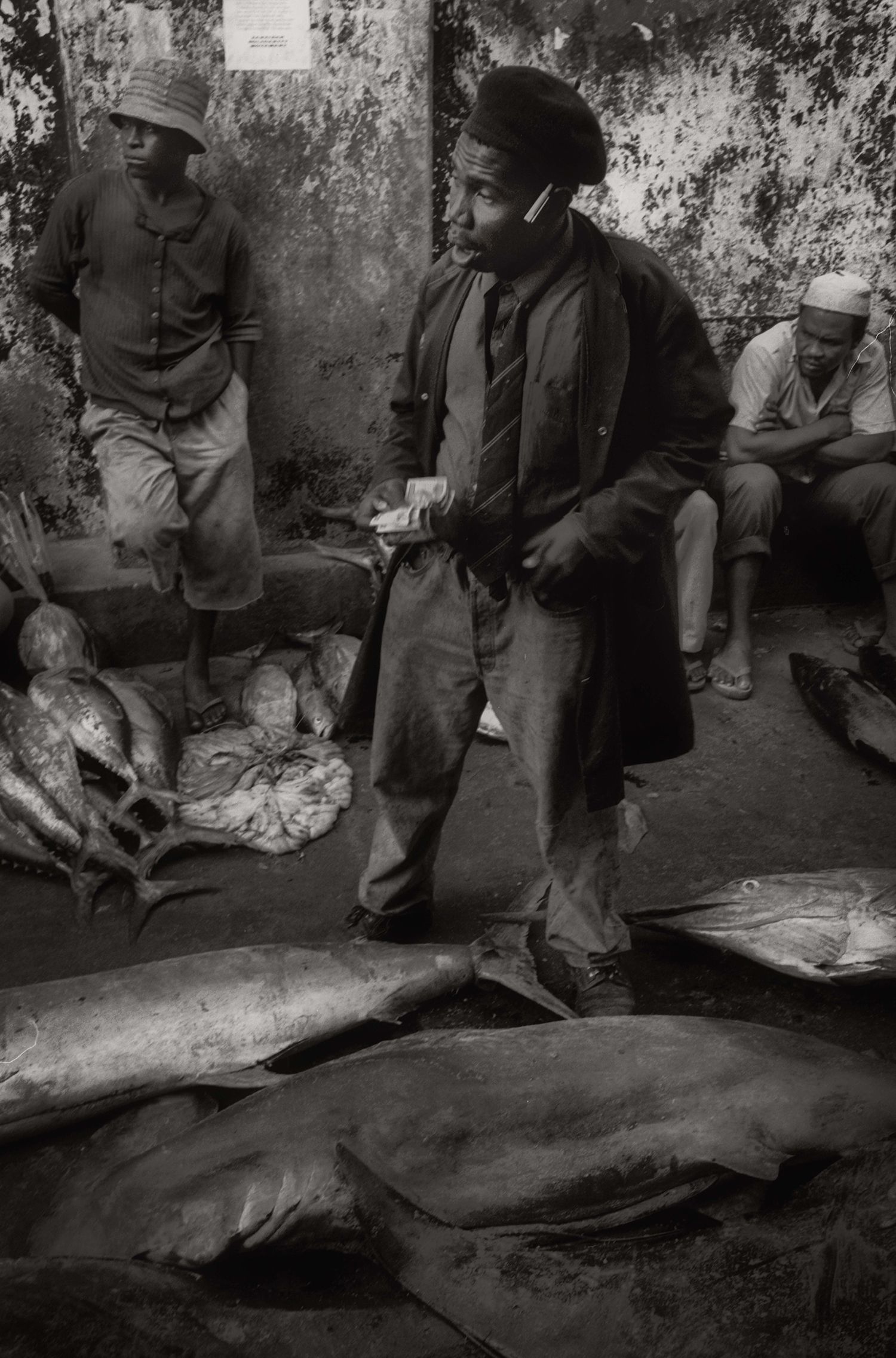
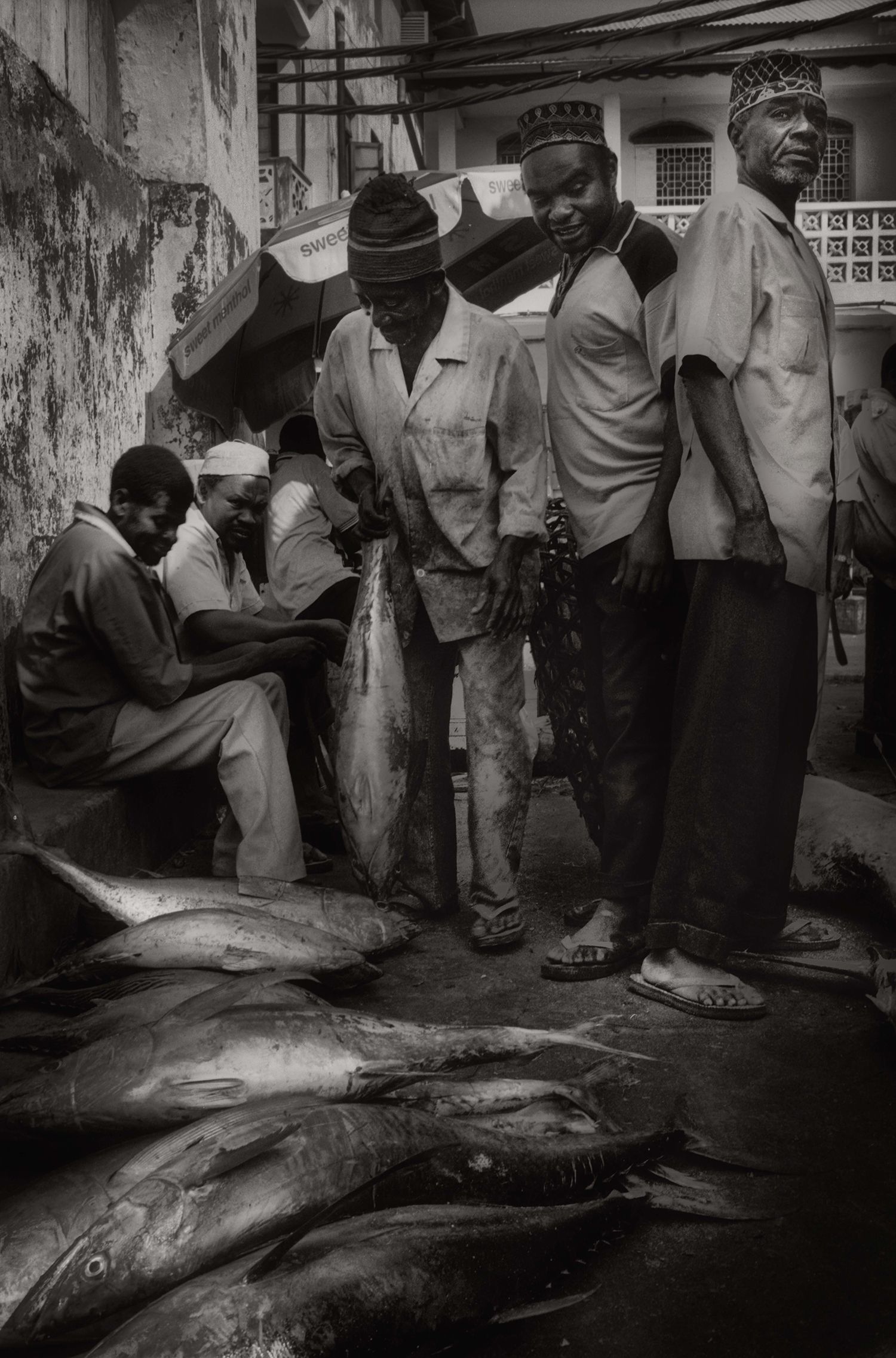
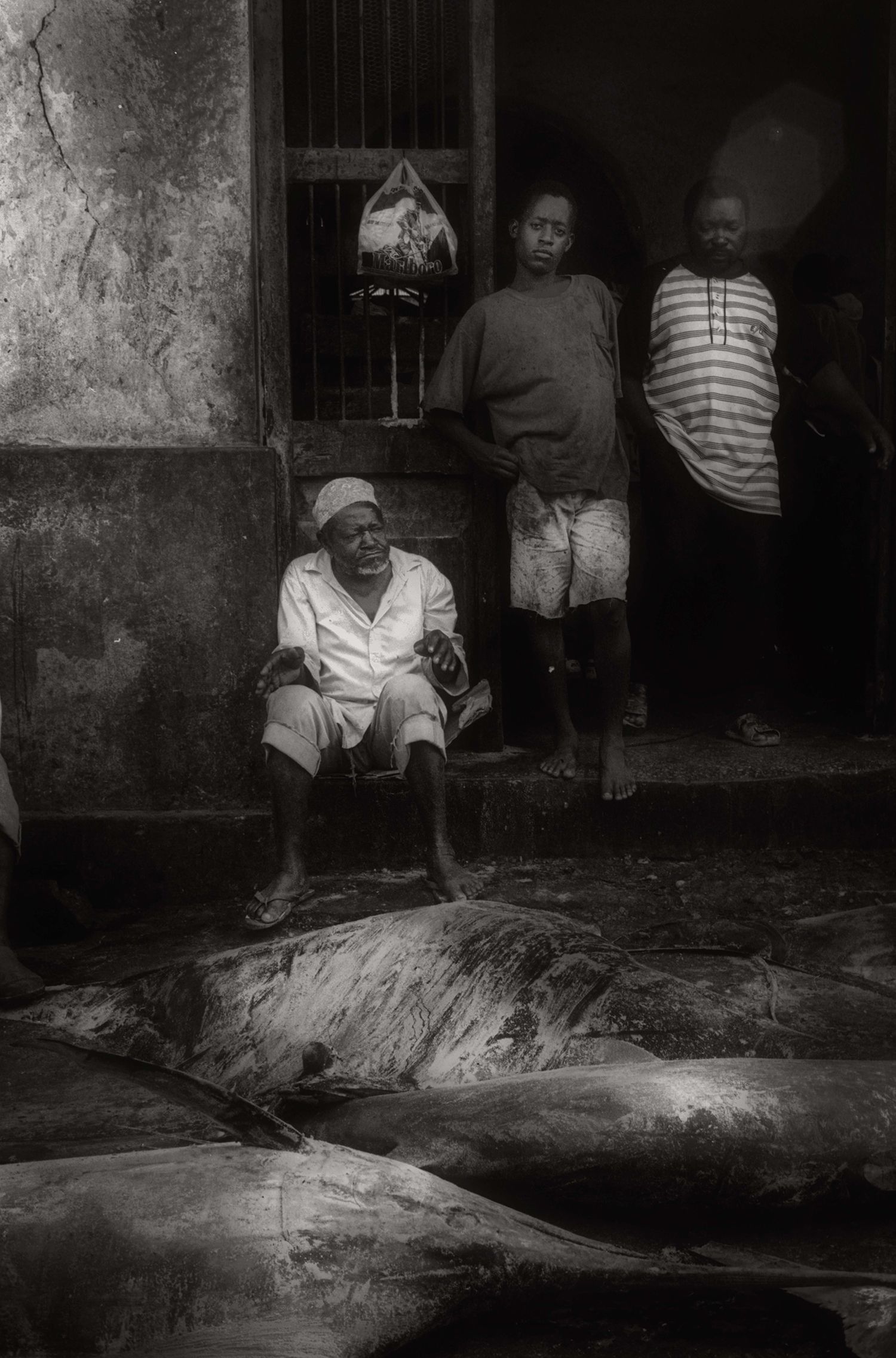
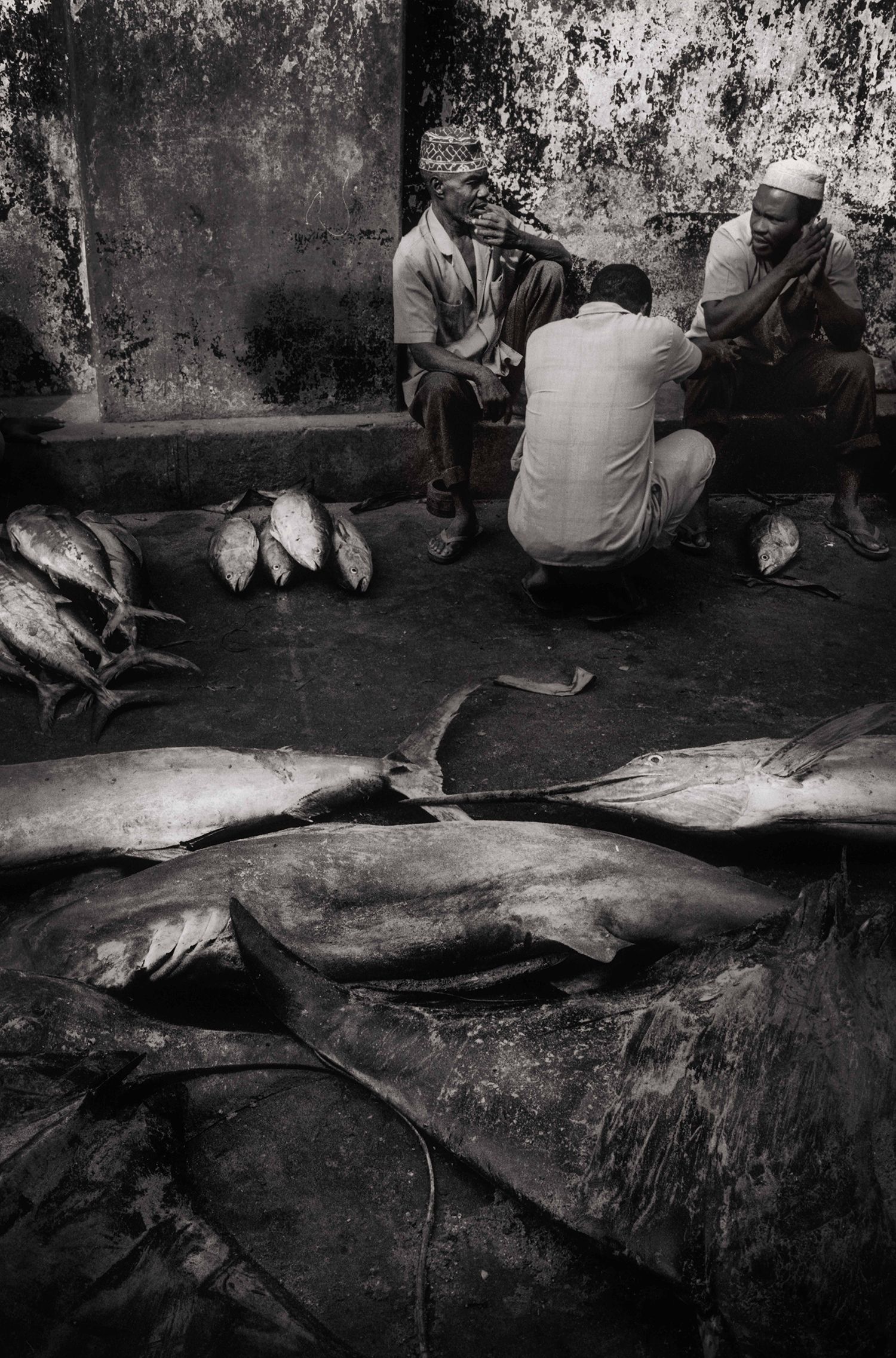
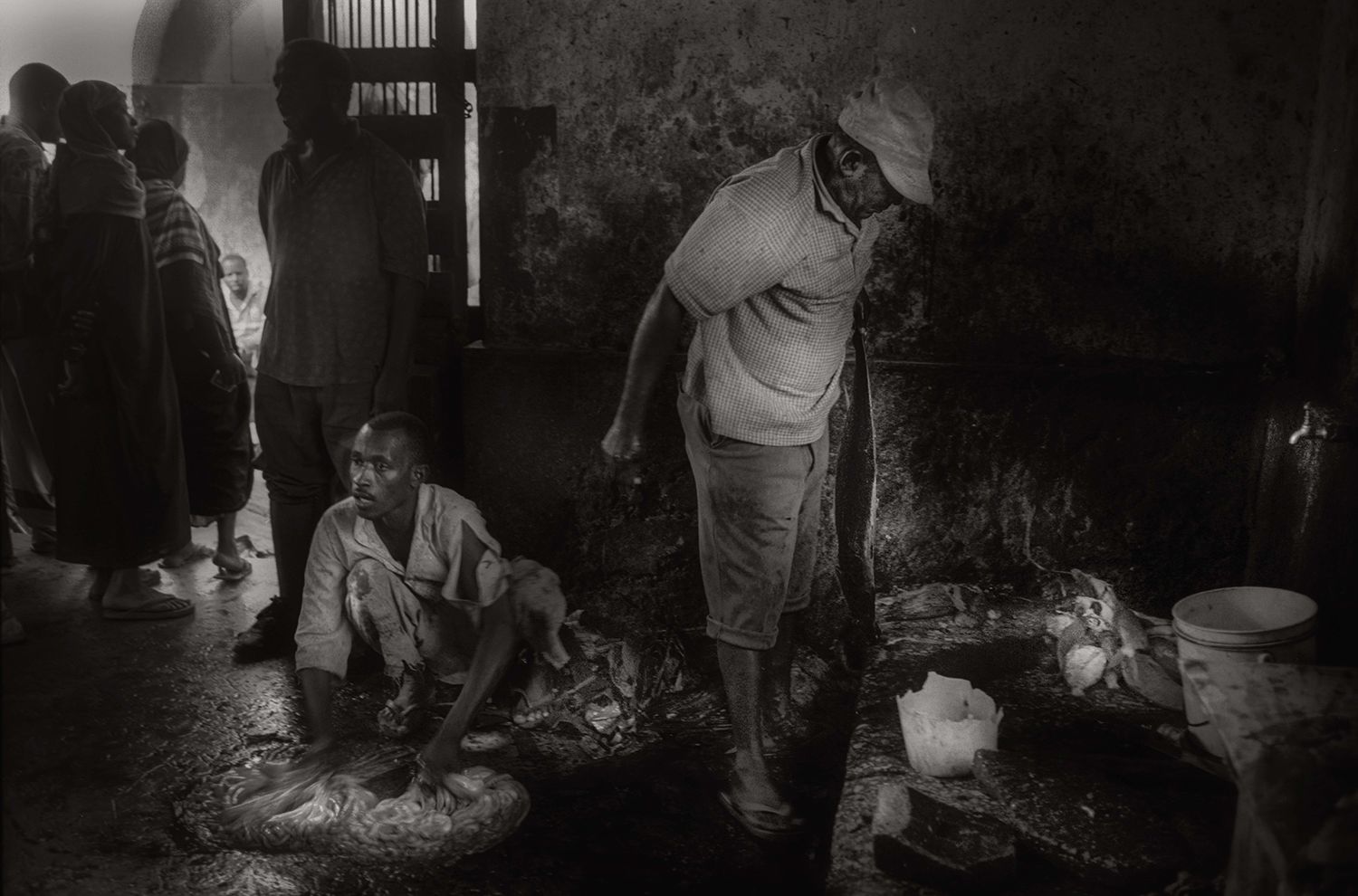
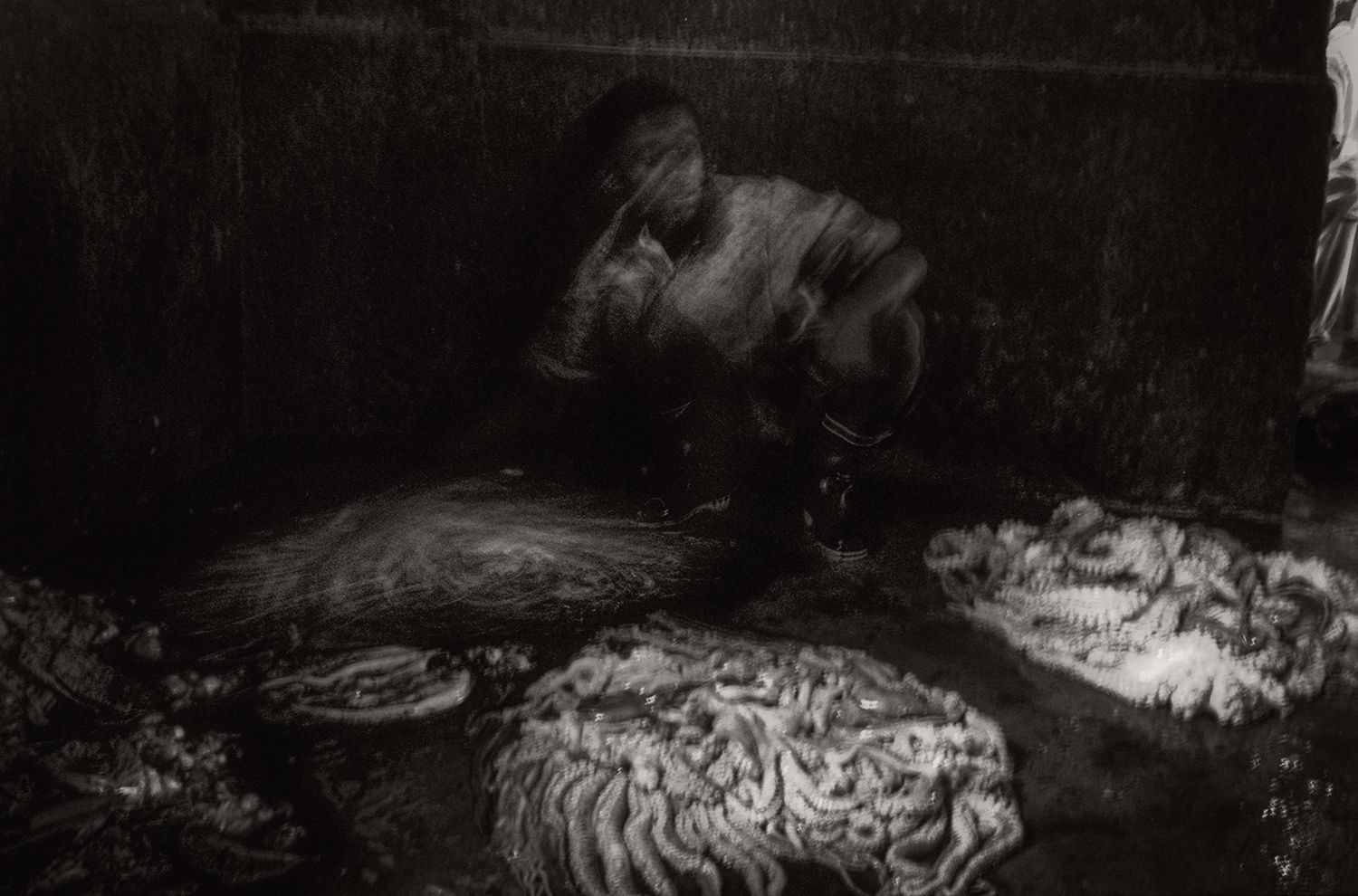
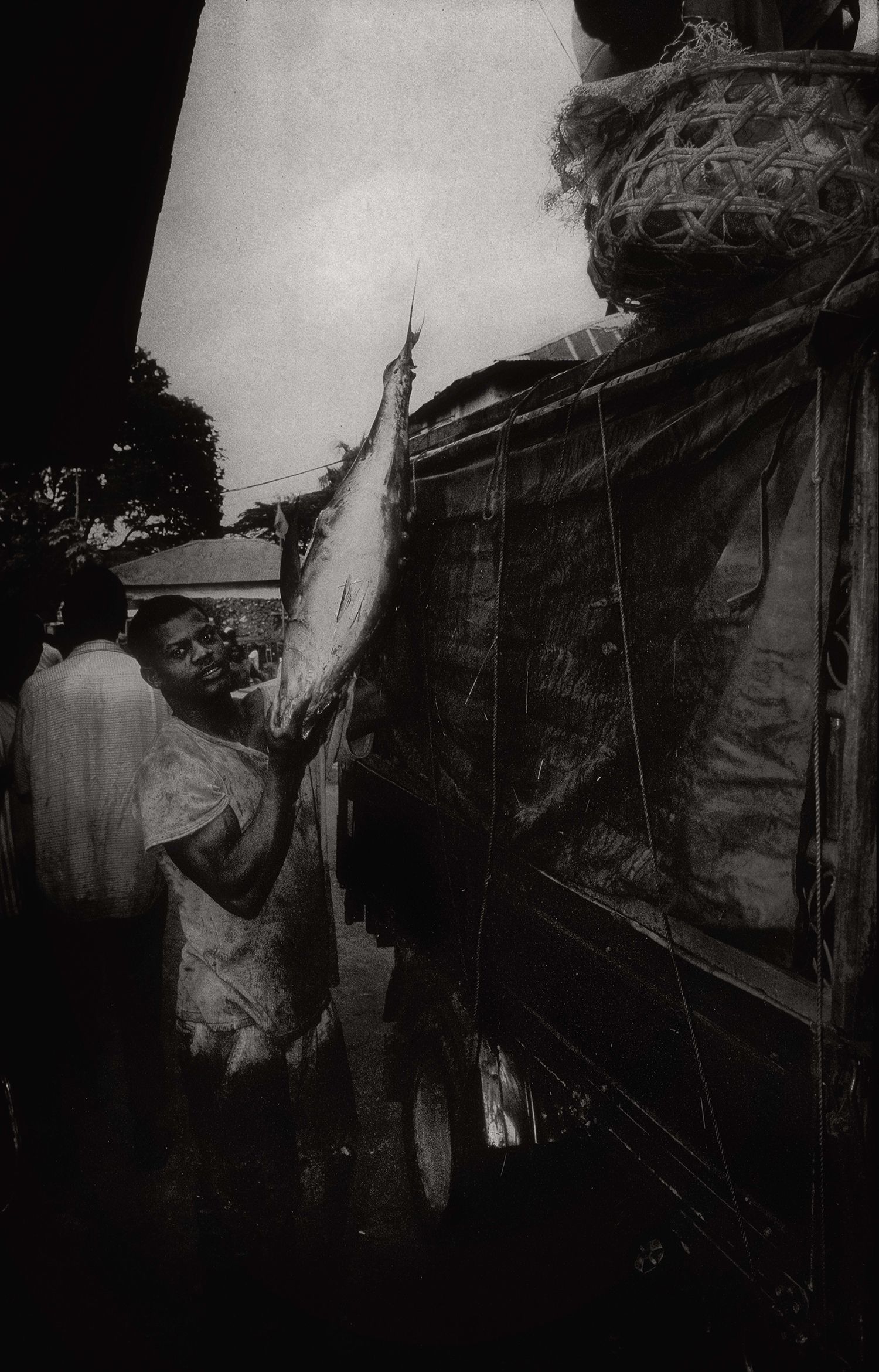
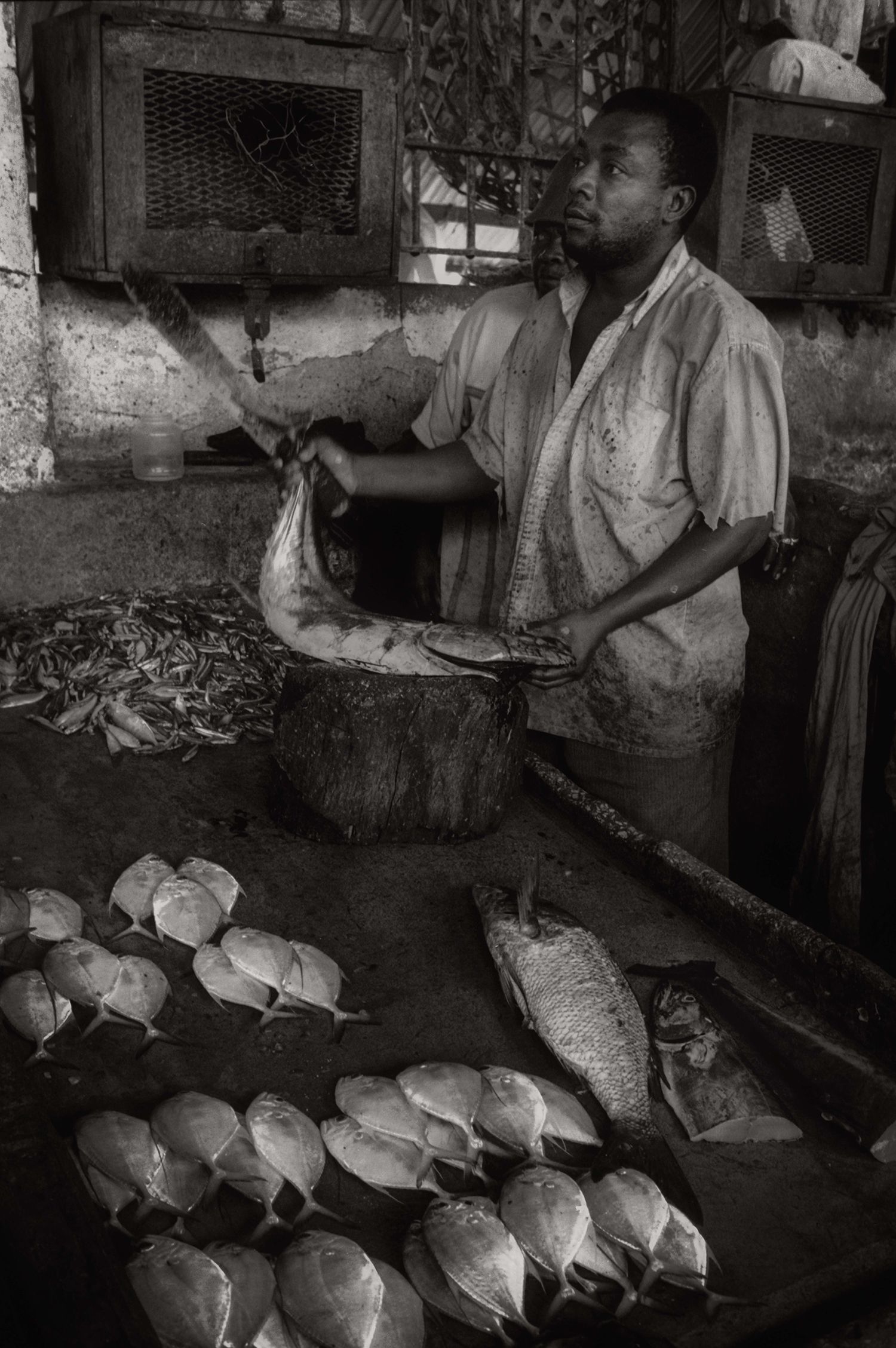
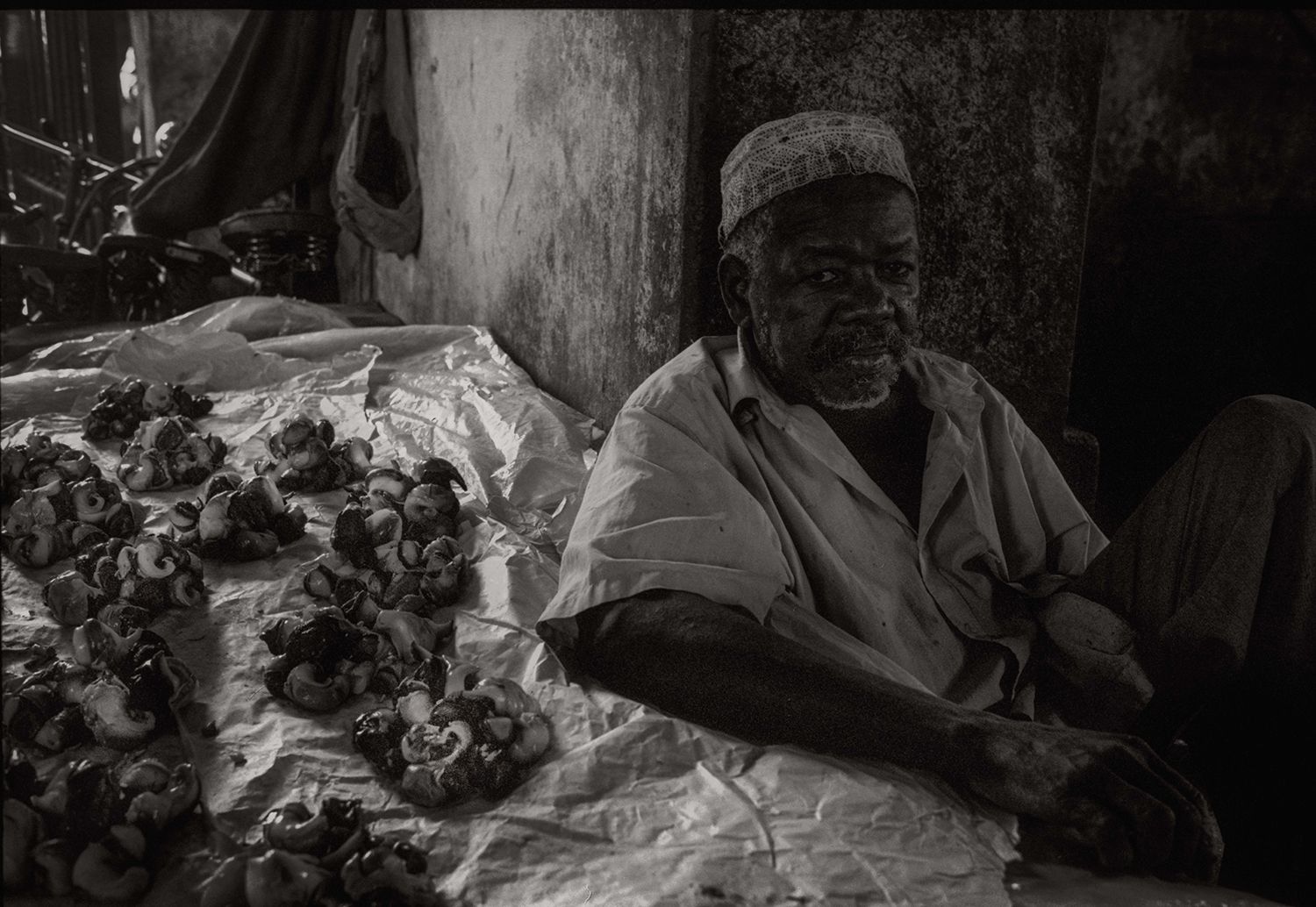
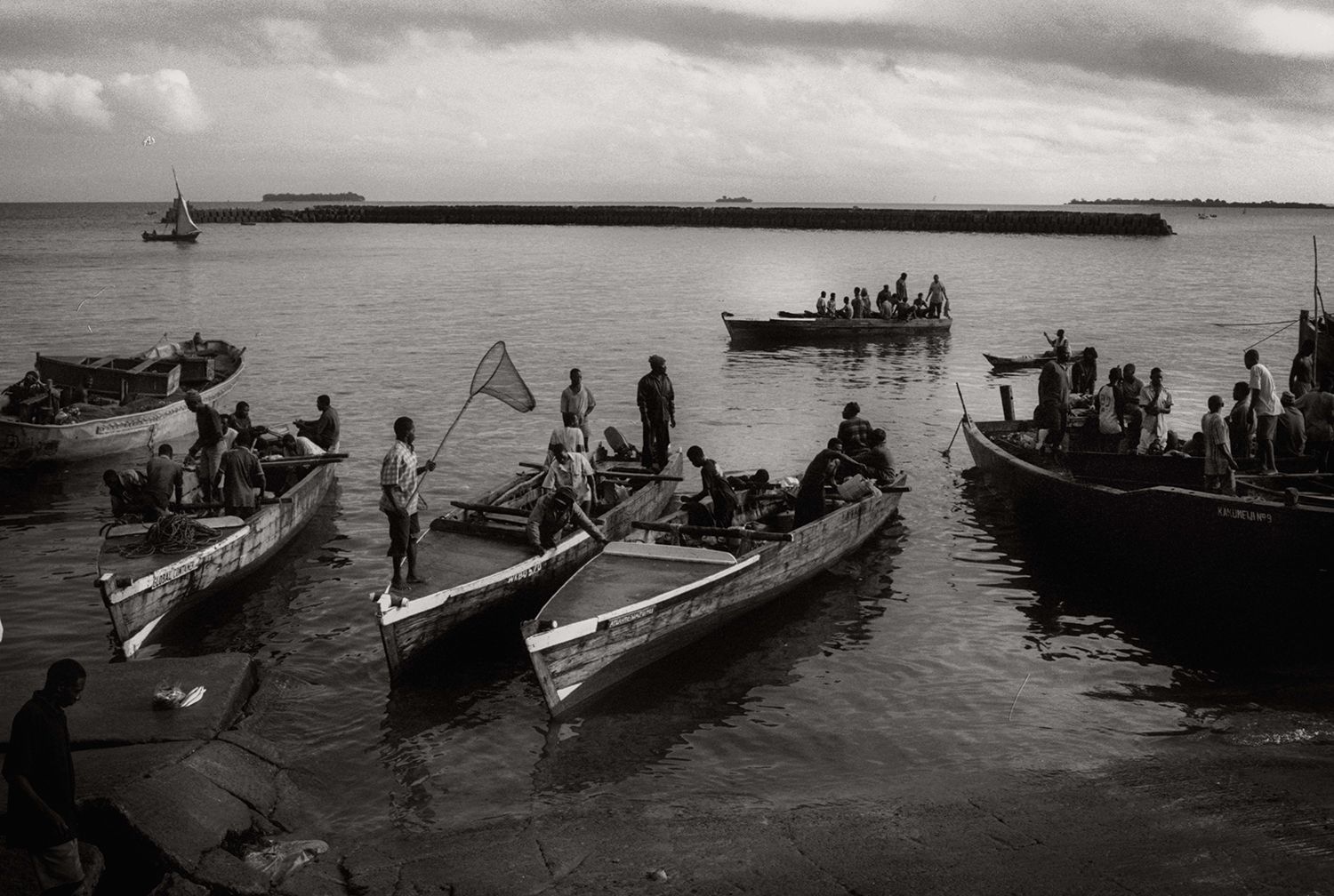
The alley was quiet. The fishmongers were laying out their goods. Few clients yet, no tourists — it was still early. But at the back doors an incredible activity was taking place. Fish was being unloaded and the workers were preparing it to be displayed and sold later: big bonefish, ray, tuna, barracuda, octopus, squid.
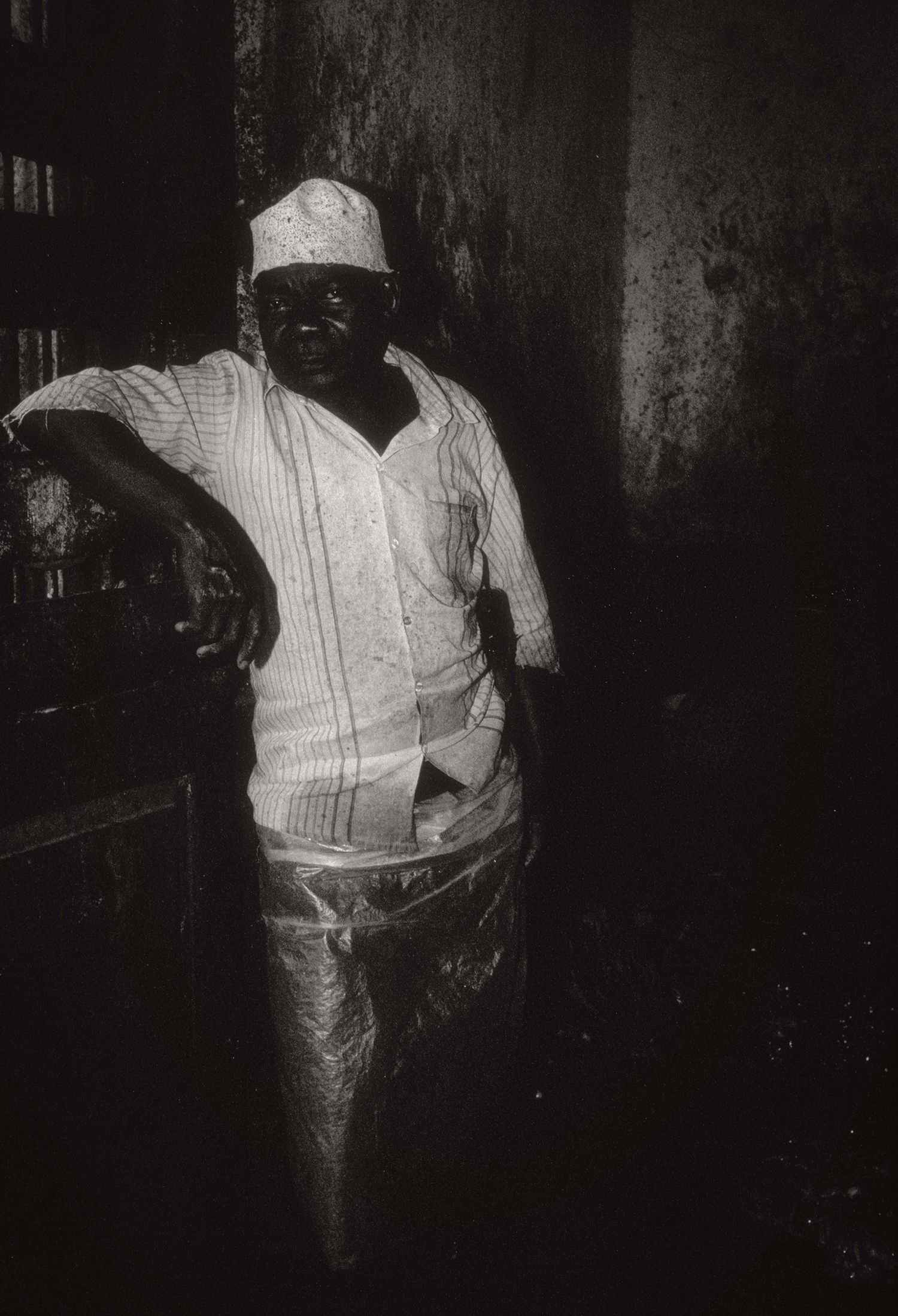
Equipped with only a machete, a club, and the strength of their muscles, these men worked hard until all the fish was ready. The work happened at the market's back door, where the sun never reaches all day — just there, facing the door, on the floor. Blood and entrails were washed away. Auctioneers sealed the big pieces, and all day customers came and went, a few tourists passing quickly. The smell was unbearable — but you get used to it easily. It was simply good, fresh fish, straight from the boats.
My thanks to the workers of Darajani Market, who let me observe their daily working life for a few days.
The main structure of Darajani Market was built in 1904 by Bomanjee Maneckjee, for Sultan Ali bin Hamud. Later at night, you can enjoy all these varieties of fish and more seafood at the Forodhani Night Food Market. Darajani Market, Stone Town, Zanzibar.